

Article-at-a-Glance: Enhancing Patient Visibility Online
- SEO is crucial for ophthalmologists to improve online visibility and attract more patients.
- Choosing the right keywords is essential for effective SEO and should reflect common patient searches.
- Quality content that educates can boost SEO rankings and establish your practice as a trusted authority.
- Technical SEO, including site speed and mobile optimization, is important for user experience and search rankings.
- Local SEO strategies help connect with the community and improve local search visibility.

Why Ophthalmologists Need SEO
Imagine you have the most advanced eye care clinic with state-of-the-art equipment and top-notch services. But what if people can’t find you online? That’s where SEO, or Search Engine Optimization, comes into play. It’s the digital equivalent of a brightly lit sign that guides patients to your doorstep. In today’s world, most people start their search for healthcare providers online. Therefore, having a strong online presence is not just nice to have; it’s a must.
The Role of Search Engines in Patient Decision-Making
Search engines are the modern-day yellow pages, but with a smarter twist. They tailor search results to individual needs, making them the go-to source for patients looking for ophthalmologists. If your website ranks high on search engine results pages (SERPs), you’re more likely to be noticed by potential patients. It’s simple: higher visibility leads to more appointments.
From Visibility to Trust: The SEO Impact
SEO does more than just put your name out there; it builds trust. When your site appears at the top of search results, it’s seen as a vote of confidence from search engines. This can significantly sway a patient’s decision to choose your clinic over another. It’s not just about being seen; it’s about being recognized as the best choice.
Mastering Keywords for Ophthalmology SEO
Let’s talk about keywords. These are the terms and phrases that potential patients type into search engines when looking for eye care services. Your goal is to identify the keywords that are most relevant to your practice and strategically use them throughout your website’s content. This makes it easier for search engines to understand what your site is about and match it with the right searches.
Finding the Right Terms: What Patients Search For
Keyword research is detective work. You need to think like a patient. What would someone type into a search bar if they were looking for an ophthalmologist? Start with basic terms like ‘eye doctor’ or ‘vision care’, and then dig deeper into more specific services you offer, such as cataract surgery or ‘LASIK consultation’. Remember, the more specific your keywords, the more targeted your audience will be.

Integrating Keywords: Titles and Meta Descriptions
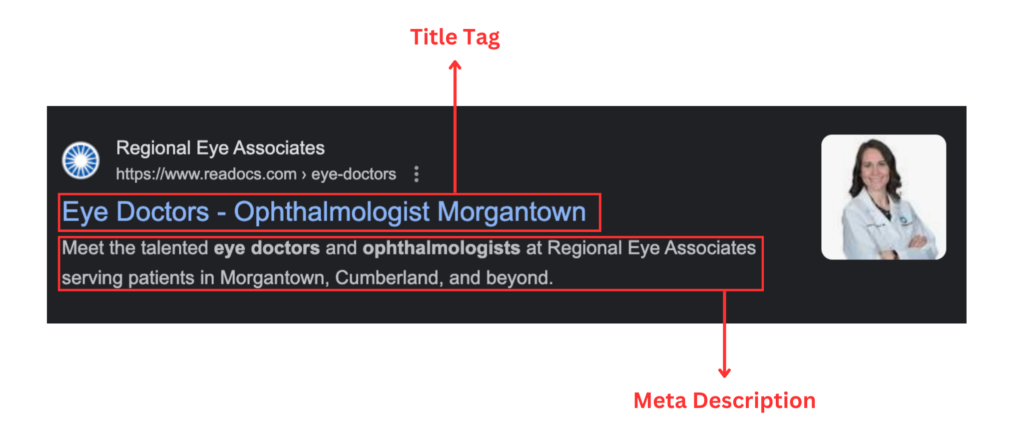
Once you’ve got your keywords, use them wisely. Your website’s titles and meta descriptions are prime real estate for keywords. These elements are what show up in search results, so make them count. A title like ‘Top Ophthalmologist in [Your City] | [Your Clinic Name]’ is clear, descriptive, and likely to resonate with local searchers. And for your meta description, a compelling brief of your services with a call-to-action can work wonders.
Creating Content That Ranks and Educates
Quality content is the backbone of SEO. Search engines love fresh, relevant, and informative content. But it’s not just about pleasing algorithms; it’s about educating your patients. By providing valuable information on eye health, treatments, and preventive care, you position your practice as a knowledgeable and trustworthy source. This not only helps with SEO but also fosters patient trust and loyalty.
The Importance of Quality in Eye Care Content
It’s not enough to just churn out content; it has to be good. High-quality content is engaging, well-researched, and reflects the needs and questions of your patients. It should offer solutions and provide insights that are not readily available elsewhere. This kind of content gets shared, linked to, and, most importantly, read by potential patients.
Answering Common Patient Queries
Think about the questions your patients ask most often and create content that answers these queries. This not only helps your SEO by aligning with what patients are searching for but also establishes your site as a helpful resource. For example, a blog post titled ‘What to Expect During a LASIK Procedure’ addresses a common concern and can draw in those considering the surgery.
Technical SEO: Ensuring a Search-Friendly Site
Getting into the nitty-gritty of SEO, technical aspects can’t be overlooked. Technical SEO involves making sure your website is structured in a way that search engines can easily understand. This includes using the correct tags for your content, creating a sitemap, and ensuring that your site is free from technical errors that could hinder search engines from crawling and indexing your pages effectively.
Another part of technical SEO is making sure your website loads quickly. Search engines, particularly Google, prioritize sites that provide a good user experience, and speed is a big part of that. Slow-loading pages can lead to high bounce rates, with visitors leaving your site before they’ve even had a chance to see what you offer.
Speed and Accessibility: Making Your Site Quick and Easy
A fast-loading website is non-negotiable. Your visitors are looking for quick answers and slow speeds can send them straight to a competitor. Use tools like Google PageSpeed Insights to analyze and improve your site’s performance. Also, ensure your site is accessible to all users, including those with disabilities. This means having alt text for images, readable fonts, and a design that accommodates screen readers.
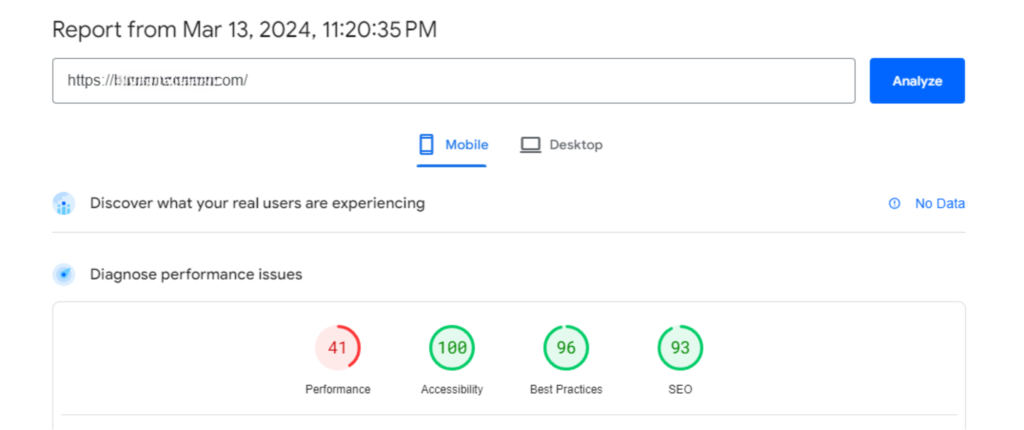
Accessibility isn’t just about being inclusive; it’s also a ranking factor. Search engines favor sites that can be used by everyone, and that means ensuring your site is navigable and understandable by all potential patients, regardless of any limitations they might have.
Mobile Optimization: Reaching Patients on Every Device
With more people using mobile devices to search the internet than ever before, your site must be mobile-friendly. This means it should look good and function well on any device, from a desktop computer to a smartphone. Google operates on a mobile-first indexing basis, which means it uses the mobile version of your content for indexing and ranking.
So, check how your site performs on different devices, and make adjustments as needed. A responsive design that adapts to various screen sizes is essential. You want to ensure that whether someone is looking up symptoms of cataracts on their phone or researching LASIK surgery on a tablet, they have a seamless experience.
Local SEO: Connecting with Your Community
As an ophthalmologist, your patient base is likely local. That’s where local SEO comes into play. It’s all about making sure people in your area can find you when they’re searching for the services you offer. Local SEO involves optimizing your website for location-based keywords, such as ‘eye doctor in [Your City]’, and making sure your practice appears in local listings and maps.
Why does this matter? Because when someone searches for ‘best ophthalmologist near me’, you want to be at the top of that list. Local SEO helps you get there.
Google My Business: Your Clinic on the Local Map
One of the most effective tools for local SEO is Google My Business. It’s a free listing that allows you to provide details about your practice, such as location, hours, and services. Most importantly, it puts you on the map—literally. When people search for ophthalmologists in your area, your Google My Business profile can appear in search results, complete with a map pin.
Make sure your profile is complete, accurate, and updated regularly. Encourage satisfied patients to leave reviews, as positive ratings can improve your visibility and attract more patients.
Citations and Directories: Be Present Where Patients Look
Besides your Google My Business profile, ensure your practice is listed in relevant online directories and citation sites. These include healthcare-specific directories and local business listings. Accurate and consistent information across these sites not only helps people find you but also strengthens your local SEO.
Remember, consistency is key. Your practice’s name, address, and phone number (NAP) should be the same everywhere it appears online. This consistency helps search engines confidently show your practice in search results, knowing the information is reliable.
Link Building Strategies for Credibility
Links from other websites to your own (backlinks) are like digital referrals. They signal to search engines that your content is valuable and trustworthy. But not all links are created equal. Quality over quantity is the rule here. A few links from reputable, high-traffic sites are worth more than many links from obscure, low-quality sites.
Link building can be a slow process, but it’s worth the effort. It’s about creating content that others want to share and building relationships with industry peers who see value in what you offer.
How Quality Links Elevate Your Practice
Quality backlinks can significantly boost your SEO efforts. They increase your site’s authority, which can lead to higher rankings in search results. But how do you get these links? By creating shareable content, like informative blog posts or engaging videos, and reaching out to other websites to feature your content or to include a link back to your site.

Another strategy is to participate in community events or sponsor local activities. This can lead to mentions and links from local organizations, further strengthening your local SEO and community presence.
The Dos and Don’ts of Link Outreach
When it comes to link outreach, there are some best practices to follow. Always prioritize relevance and quality over sheer numbers. Here are some dos and don’ts:
- Do reach out to industry-related websites for guest blogging opportunities.
- Do create high-quality, original research or content that provides value and is worth linking to.
- Don’t buy links or engage in spammy link-building practices.
- Don’t expect immediate results. Link building is a long-term strategy.
Analyzing Your SEO Efforts
SEO is not a set-it-and-forget-it endeavor. It requires monitoring and adjusting based on performance. Use analytics tools to track your website’s traffic, see where your visitors are coming from, and understand what they’re doing on your site. This data is invaluable for refining your SEO strategy and making informed decisions about where to focus your efforts.
Look at metrics like your site’s bounce rate, the average time spent on your site, and the pages that are most frequently visited. If certain pages have a high bounce rate, for example, that might indicate that the content isn’t meeting visitors’ expectations, and it’s time for a revamp.
Measuring Success: SEO Metrics That Matter
Success in SEO isn’t just about getting to the top of search engine results; it’s about understanding how you got there and what impact it has on your practice. Key metrics to track include your search engine rankings for targeted keywords, organic traffic to your website, and conversion rates. Are more people booking appointments after finding you through a search? That’s the ultimate sign of SEO success.
Adjusting Your Strategy Based on Data
SEO is an ongoing process. As you collect data, you’ll need to tweak your strategy. Maybe some keywords aren’t performing as well as you hoped, or perhaps there’s a page on your site that’s attracting a lot of traffic but not converting visitors into patients. Use this information to make informed decisions, such as revising your content or changing your keyword focus, to continually refine your online presence.
10 Best States for an Ophthalmologist with Salary

West Virginia

Minnesota

Nebraska

Alaska

Wyoming

Kentucky

South Dakota

North Dakota

Montana

Iowa

FAQs
How Long Does It Take to See SEO Results?
SEO is a marathon, not a sprint. It can take several months to see significant changes in your search rankings and traffic. This is because search engines need time to crawl and index your updated website, and for the effects of your link-building efforts to become apparent. Patience and persistence are key.
Can I Do SEO for My Practice or Do I Need a Professional?
While it’s possible to manage your SEO, it can be a complex and time-consuming process. If you’re not familiar with the ins and outs of SEO, it might be worth investing in a professional who can ensure your site is optimized effectively. This can free you up to focus on what you do best – taking care of your patients.
Is SEO More Important Than Social Media for Ophthalmologists?
SEO and social media serve different purposes, but both are important. SEO helps you get found by people actively searching for your services, while social media allows you to engage with your community and build relationships. Ideally, your online marketing strategy should include both.
How Often Should I Update My Website Content?
Search engines favor websites with fresh content, so aim to update your site regularly. This could mean adding new blog posts, updating existing pages, or posting news about your practice. A good rule of thumb is to add new content at least once a month, but more often is even better.






Leave a Reply